
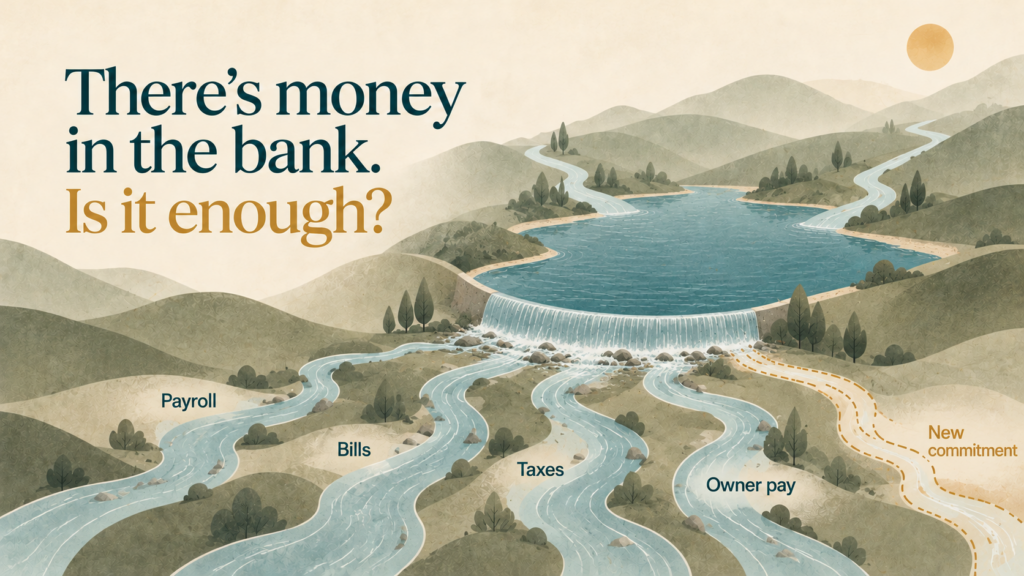
Maybe you need another set of hands. Maybe it’s time to replace equipment—or invest in something that would make the work easier. You can see the benefit. What’s harder to pin down is whether your business has the cash flow to take it on or sustain it.
You’ve built a mental rhythm around your business cash flow. You watch your bank balance. You know when customers usually pay. You know when the big bills hit. You’ve built a mental rhythm around your cash flow.
Now you’re thinking about hiring someone or buying equipment.
Your gut says, “I think we can swing this.”
But this is a new commitment. Does the rhythm you’re used to leave enough room for it?
Your financial records can help you work that out. But having the reports and knowing how you can use them are two different things.
Take the Statement of Cash Flows. It explains how your cash changed over a period. But the familiar version starts with net income, adds and subtracts adjustments, and groups cash activity into operating, investing, and financing categories.
I have a master’s degree in accounting, and I still have to pause and decode it.
A simpler way to look at cash
In my earlier real estate work, we used a summary called sources and uses. We’d pull information from different places, line it up, and lay it out:
Here are the available funds.
Here’s what the plan requires.
If there’s a gap, here’s how much we still need to adjust.
That might mean finding more funding, changing the timing, or adjusting the scope.
That same thinking is useful in a small business.
| Statement of Cash Flows | Amount | Sources and Uses of Cash | Amount |
|---|---|---|---|
| Operating activities | Sources | ||
| Net income | $8,000 | Customer payments received | $46,000 |
| Add back depreciation | $2,000 | Loan proceeds received | $6,000 |
| Increase in accounts receivable | ($4,000) | Total sources | $52,000 |
| Increase in accounts payable | $1,000 | Uses | |
| Decrease in credit card payable | ($2,000) | Operating payments from bank accounts | $39,000 |
| Net cash from operations | $5,000 | Payments against prior operating credit card balances | $2,000 |
| Investing activities | Equipment purchase | $10,000 | |
| Equipment purchase | ($10,000) | Loan principal repayments | $3,000 |
| Financing activities | Owner draws | $4,000 | |
| Loan proceeds | $6,000 | Total uses | $58,000 |
| Loan principal repayments | ($3,000) | ||
| Owner draws | ($4,000) | ||
| Net decrease in cash | ($6,000) | Sources less uses | ($6,000) |
| Beginning cash | $12,000 | Beginning cash | $12,000 |
| Ending cash | $6,000 | Ending cash | $6,000 |
Same cash story. A different way to see it.
The Statement of Cash Flows shows how accrual accounting reconciles to cash.
The Sources & Uses summary shows only actual cash in and out — the part owners need for decision-making
Look back to to see what’s happening
Start by looking back. Over several months, what has actually been coming in and going out? What’s recurring? What fluctuates? Has borrowing or money from your own pocket been keeping the balance comfortable?
Your P&L provides part of that picture. But profit alone won’t tell you what cash is available.
You also need to consider customer invoices that haven’t been collected, bills that still need paying, credit card balances, loan principal payments, equipment purchases, and owner draws.
Together, those details help explain how you arrived at today’s balance—and what that money already needs to cover.
Plan for what’s ahead
What cash do you reasonably expect to receive?
What will need to be paid?
When?
Layer in the commitment you’re considering. For a hire, that includes wages, employer taxes, onboarding, and equipment. For a purchase, it might include the upfront payment, financing, and ongoing costs.
You can also consider what the decision makes possible, while being realistic about whether—and when—it changes the cash coming in or going out.
Starting with available cash, map the expected sources and uses over the coming weeks or months.
Is there a dip?
How deep?
How long?
What cushion remains if a customer pays late or costs run higher than expected?
Now you can see what needs to be true for the decision to work.
You might move forward. Shift the timing. Adjust the scope. Arrange funding.
This is advisory: looking back, understanding where you stand, and planning for what’s ahead.
Clean books give you the data.
True Insights helps you turn that data into decisions.